CK3 Dev Diary Breaks Down the Trade System Coming With Silk & Silver
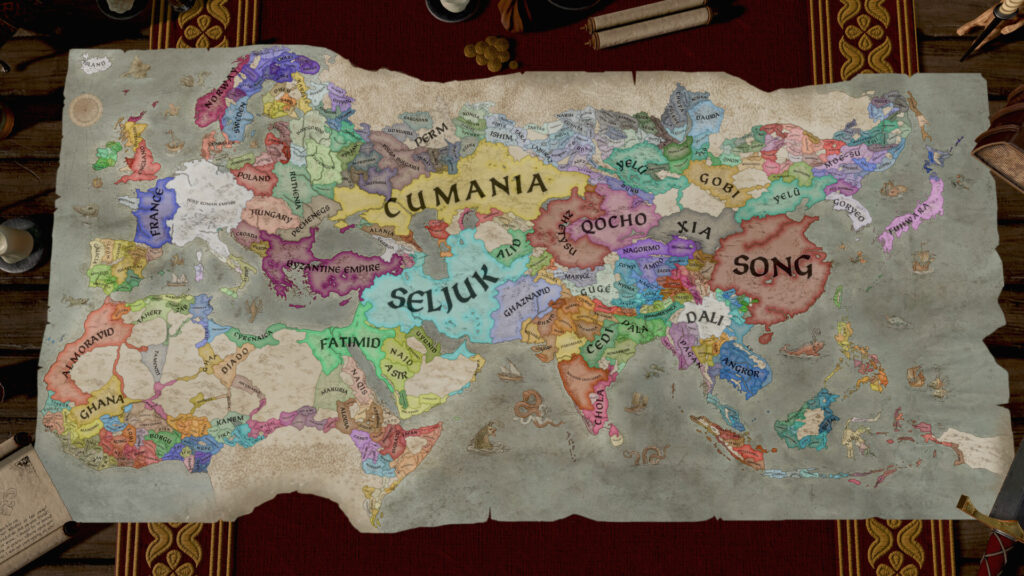
Paradox posted the eighth dev diary for Crusader Kings III’s Silk & Silver expansion on Steam on October 27, 2026. Where the May diary talked about the vision for Trade, this one goes technical and shows how Markets, Goods, Production, Needs and Routes actually function right now. The developer, posting as chaddling, is clear that every number shown is a placeholder define still being balanced, so none of this is final.
The game will get 922 Trade Markets, one for each de jure duchy that has at least one county. Each Market sits in a Market Capital, usually the duchy’s capital barony, though 54 duchies get a different capital assigned so the Market sits on the coast. Markets are locked in at the start of the game: if a county later shifts to another duchy, its baronies stay tied to the Market they began in, even though the name and Prosperity value follow the duchy. Whoever holds the county with the Market Capital barony becomes the Market Owner, setting tolls, granting monopolies and issuing Commission Routes.
Goods, Production and Needs
There are 44 Trade Goods split across 20 Need Categories, plus 16 extra grouping categories like Luxury or Staple Goods that only modifiers can target. Sixteen goods count as Basic Goods, the only kind Distribution Routes can carry. Nine goods, including cheese, beer, textiles and books, can’t be produced from county resources at all and only appear once a building converts other goods into them.
Production comes from script-defined county potential, the matching Resource District, and a mix of Add, Flat and Mult modifiers each barony calculates every month. Needs come from buildings, nearly 4,500 of them across the game, and each unmet need simply denies its bonus rather than being punished directly by the trade code. Script decides the consequences elsewhere, like a hungry Holding losing settlement size over time.
Pricing, Priority and the Monthly Cycle
When a Market can’t cover every need, fulfillment follows a strict order, starting with the Market Capital’s own county and barony before moving outward by settlement size, and players can reorder their districts and buildings to push certain needs up that queue. Prices run off a base value adjusted by Prosperity rather than supply and demand: a thriving Market at 100 Prosperity sells up to 50% higher, while a struggling Market near 0 buys up to 15% cheaper. The diary works through a Cured Meat example landing on a margin of roughly 0.0138 gold per bundle after tolls.
Markets and Routes don’t all update on the first of the month. Instead they’re split into 30 daily buckets so the whole map doesn’t process at once, meaning a Route and the Markets it passes through often tick on different days and have to stay synced through a multi-step handoff.
What This Means for Players Who Mod CK3
Crusader Kings III has a long-running modding scene, and an overhaul this deep into Markets, buildings, Need definitions and route math touches a lot of the files mods typically hook into. Anything that adds buildings, adjusts county production, or reworks the economy is the kind of mod that usually needs a look once a system like this actually ships, since the numbers here are still being tuned and could shift again before release. If you rely on economy, building or map mods, it’s a good idea to back up your current save and mod list now and hold off updating your game version until your mods confirm compatibility with Silk & Silver.
Based on the developer's announcement on Steam, 27 October 2026.